Residential Solar Installation in Salinas, CA

Residential solar installation covers roof or ground array design, racking and flashing, string or microinverter wiring, and utility interconnection for Salinas homeowners. Older Alisal and North Salinas homes often need main panel evaluation before a system is sized. Coastal fog and summer heat both affect production modeling, so array tilt and azimuth are set from site data, not guesswork. Salinas Solar Panel Installation Pros schedules 2026 site assessments and permit-ready designs. Calls are returned the same business day.

CALL US AT 831-282-3539

We want to hear from you

Send us your details and we’ll get back to you to schedule a time to talk.

Residential Solar Service Overview

What Our Residential Solar Installation Service Includes

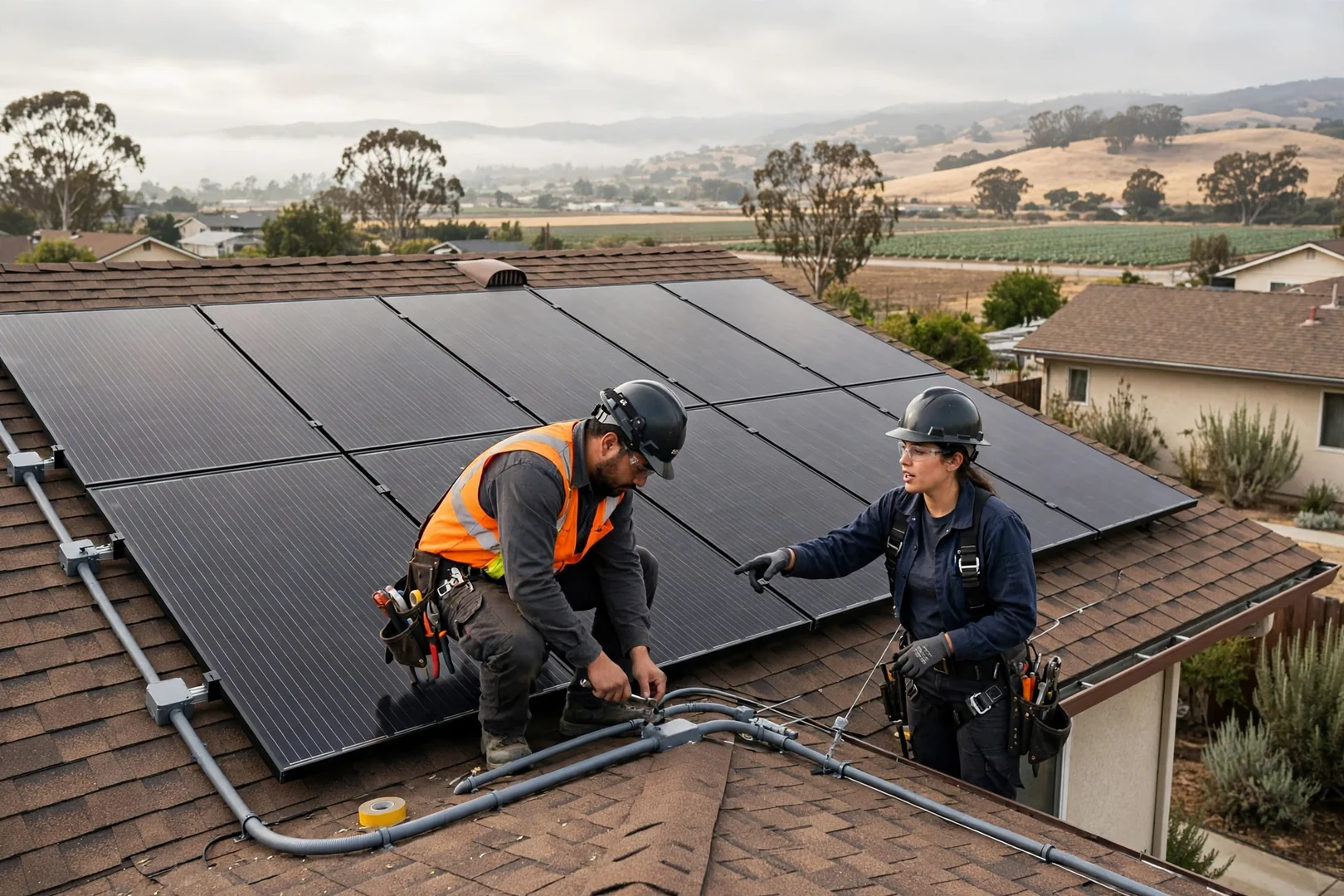
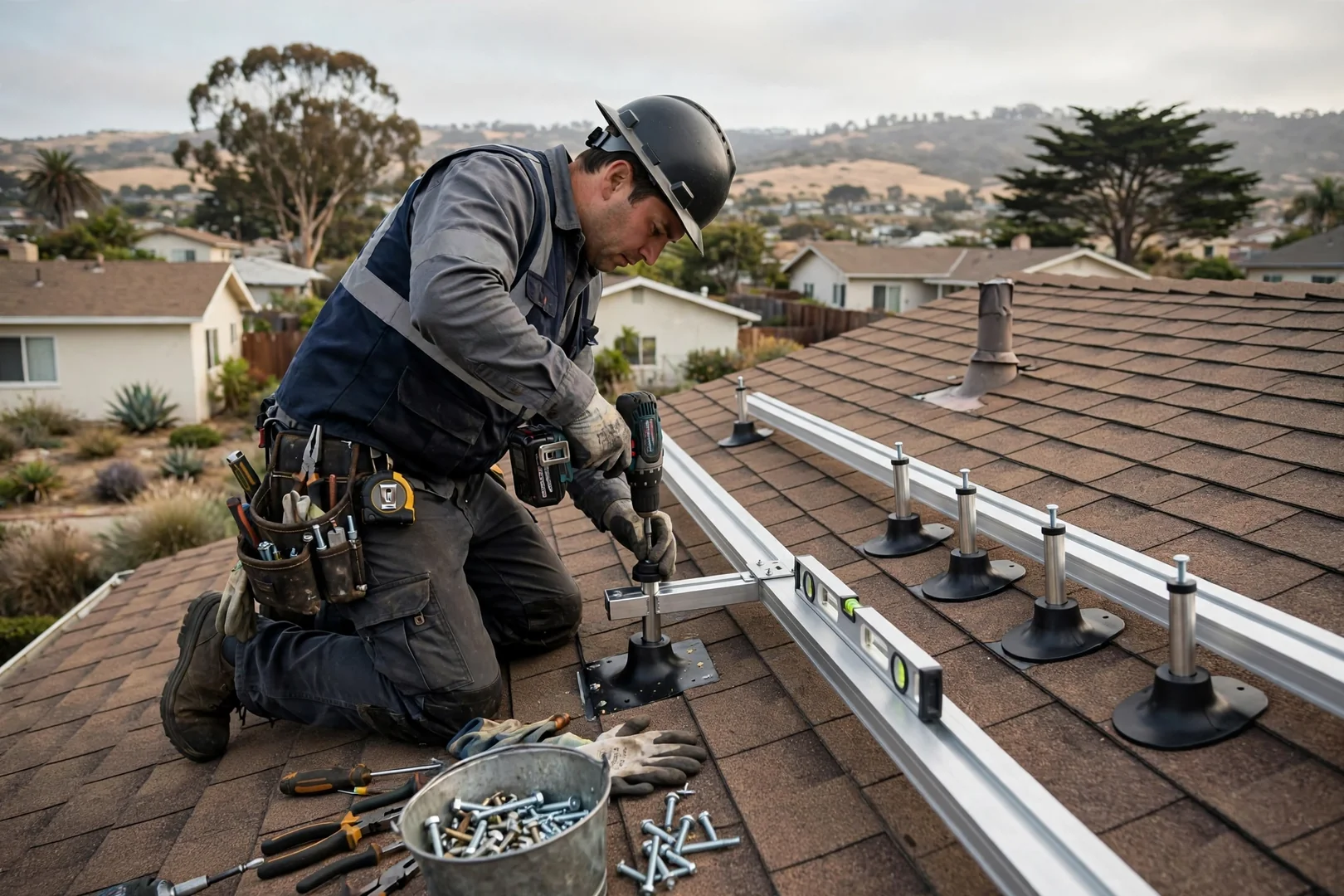
Residential solar installation is the process of designing, permitting, mounting, and interconnecting a photovoltaic system on a home, and at Salinas Solar Panel Installation Pros it includes load analysis, array layout, racking and mounting, inverter setup, and utility interconnection across Salinas properties. Work starts with a roof condition check, rafter layout mapping, and shade measurement to confirm production estimates. Mounts are lagged into rafters and flashed to keep the roof watertight. Conduit runs, rapid shutdown devices, and grounding are installed to current NEC and California code requirements, then inspected before commissioning. We also handle multi-unit buildings and light commercial roofs using the same documented process. Every 2026 install includes scheduled arrival windows, a written scope, labeled equipment, and a post-job walkthrough with monitoring setup and permit records handed over.

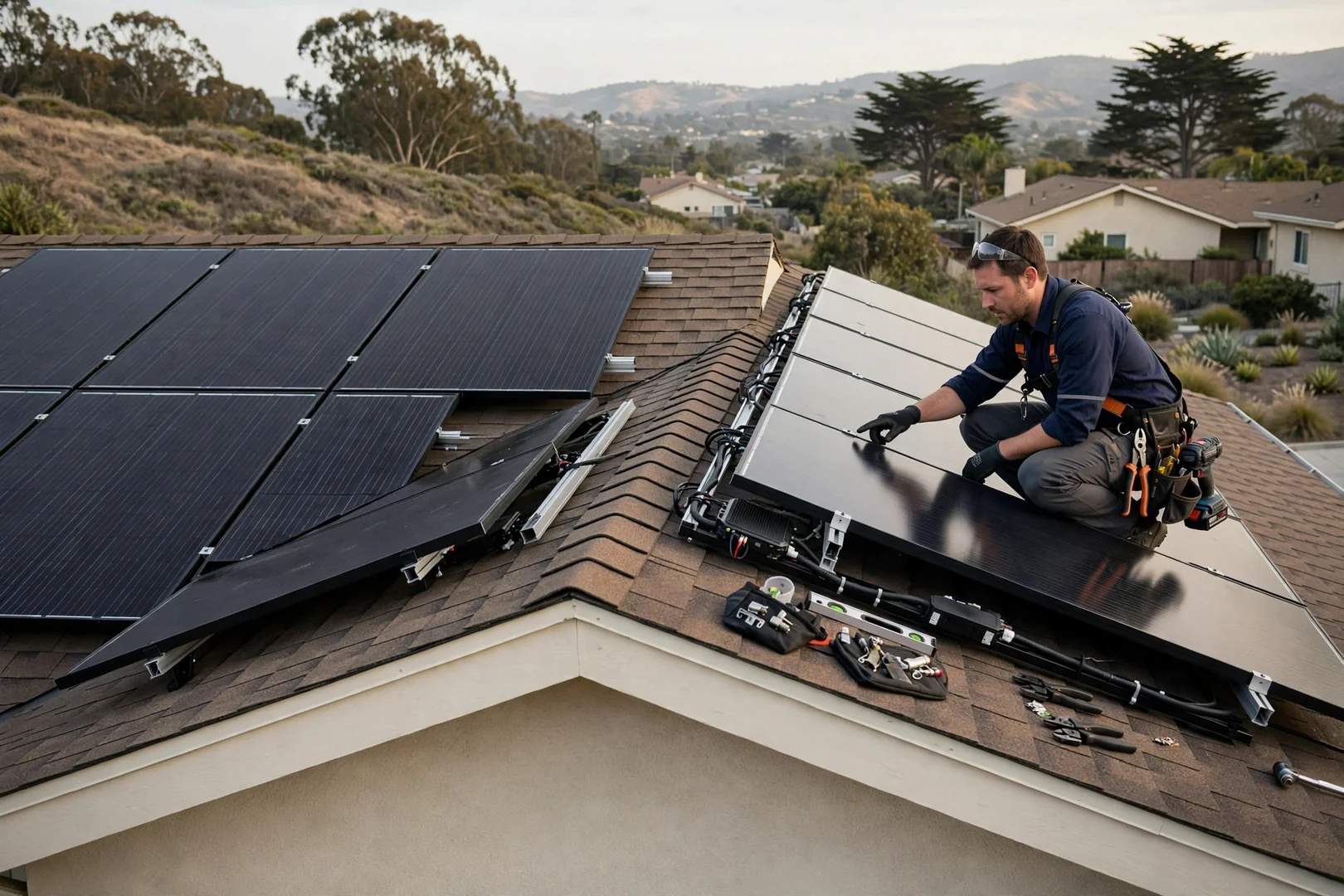
Installer securing roof mounted solar panels on a Salinas single family home

// Residential Solar Installation Cost Factors //

How Much Does Residential Solar Installation Cost in Salinas?

Residential solar installation pricing in Salinas depends primarily on system size in kilowatts, panel and inverter selection, roof complexity, and electrical upgrade needs, with 2026 quotes built from measured site data rather than averages. System size follows your annual kilowatt-hour usage and available unshaded roof area. Equipment choice matters next: string inverters cost less than microinverters, and higher-efficiency modules raise cost per watt but need less space. Roof type and pitch change labor time, since tile and low-slope membranes require different mounting and flashing methods than composition shingle. Main service panel upgrades, subpanel work, long conduit runs, or trenching for ground mounts add line items. Permit and interconnection fees vary by jurisdiction. Battery storage, if added, is priced separately. Exact numbers require a site assessment, so we measure the roof, check the panel rating, and provide a free written estimate with each cost line listed.
Call us on: 831-282-3539
Homeowner reviewing a written solar installation estimate with an installer at a kitchen table
Roof-mounted solar array on a Salinas home with clear sun exposure
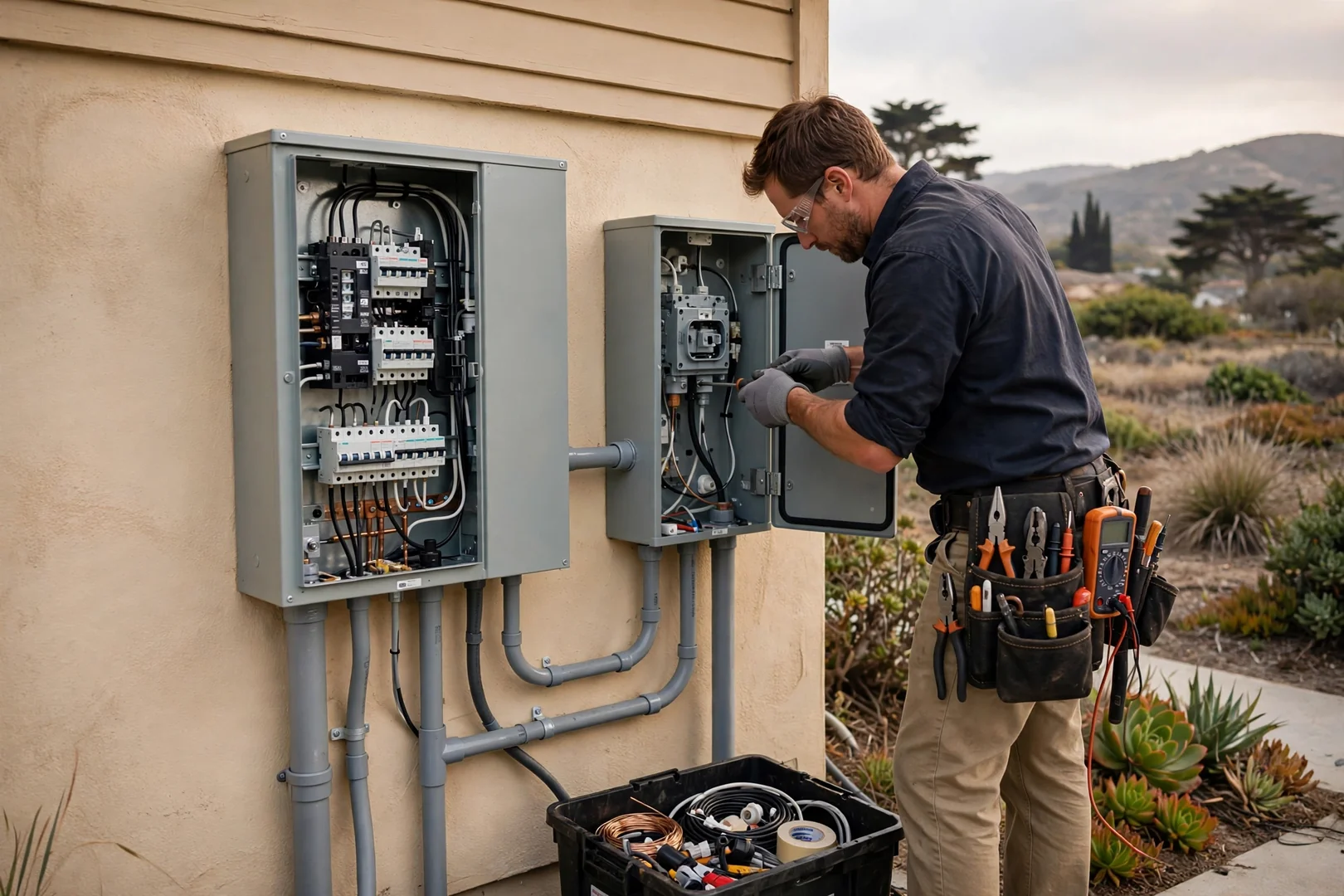
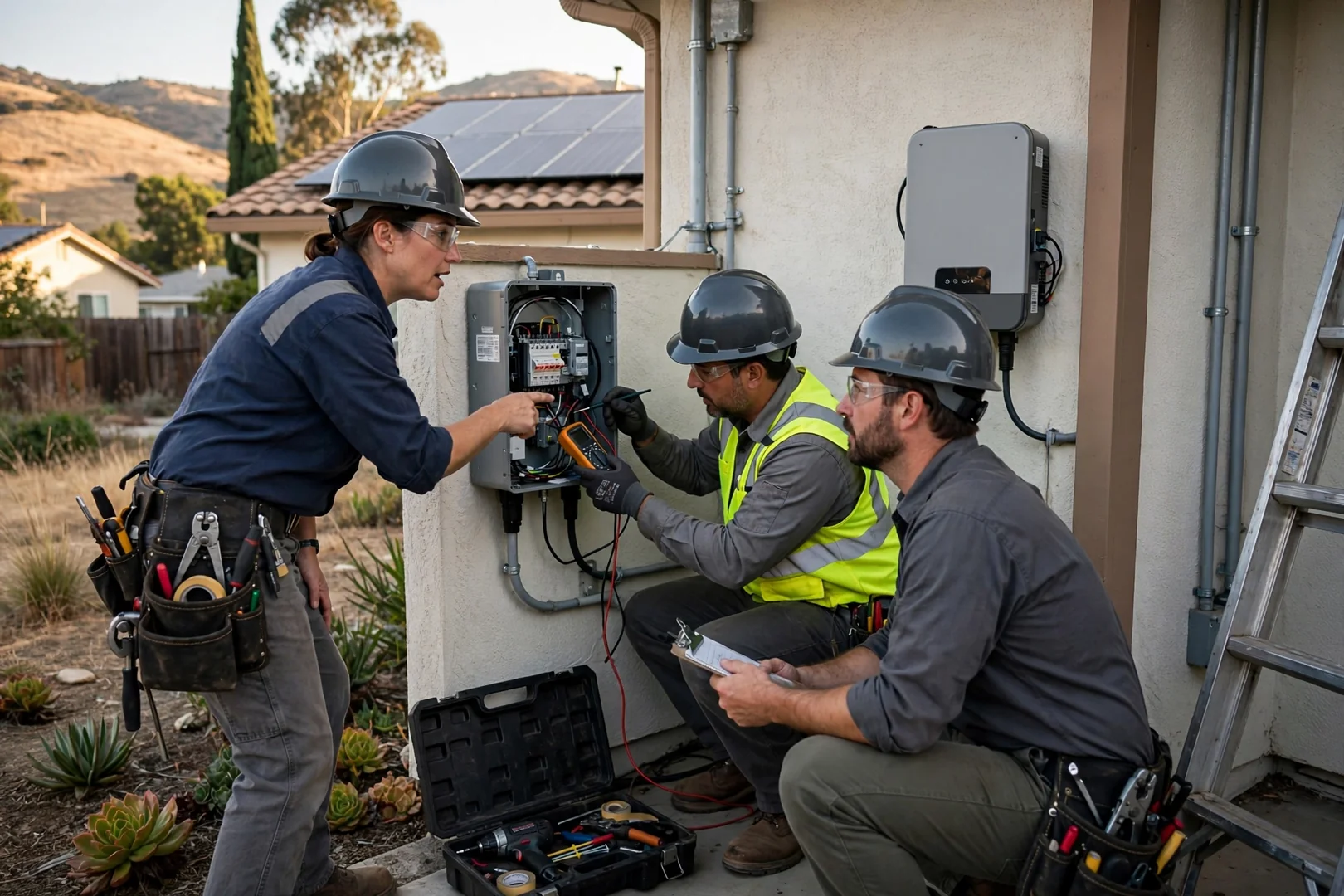
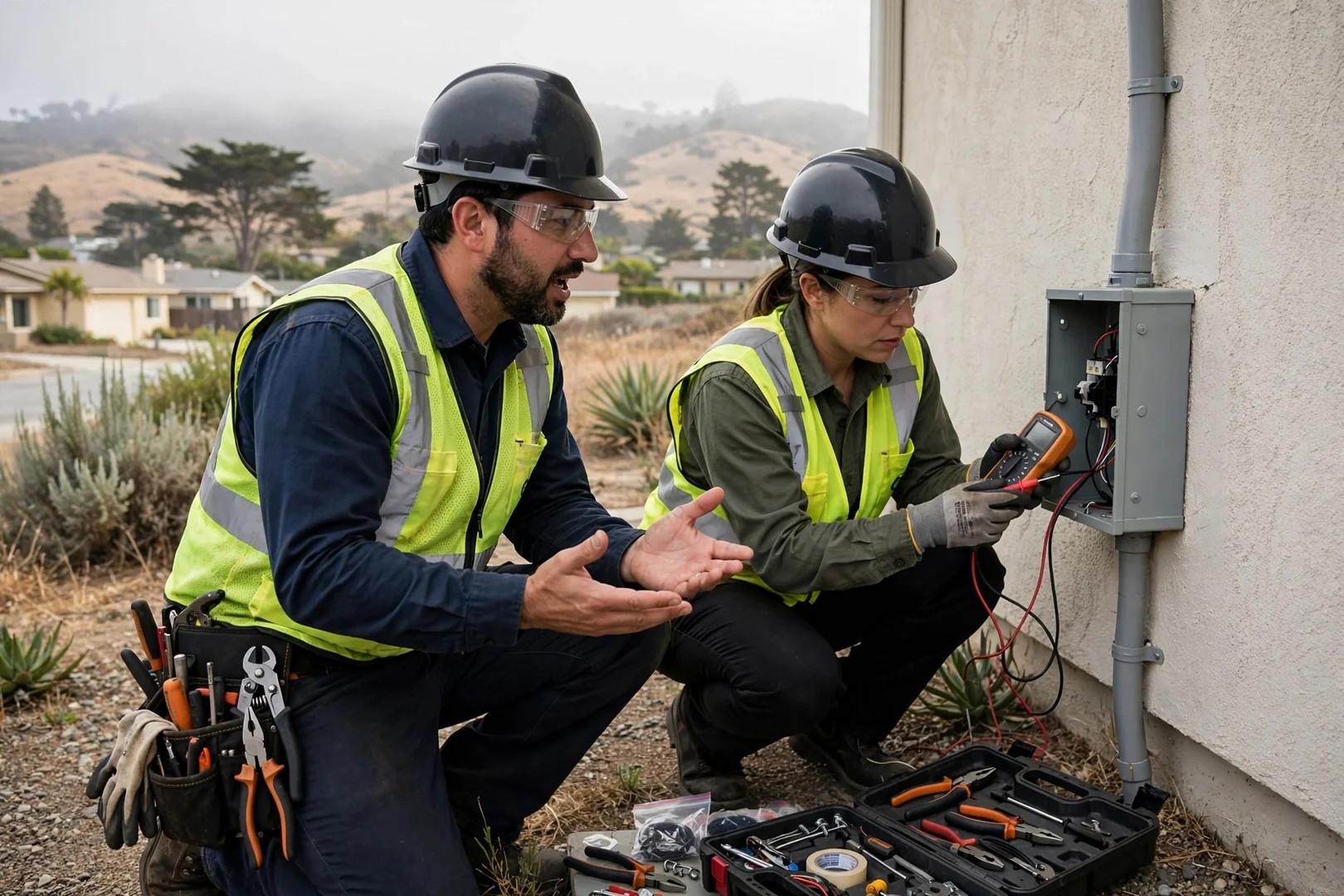
Technician checking main service panel capacity before solar installation

Signs Your Home Needs Solar

What Signs Mean Your Salinas Home Needs Residential Solar?

Residential solar installation is the fix when utility bills keep climbing, your roof gets steady southern exposure, and grid outages interrupt daily use. Rate tiers under net billing have pushed many Salinas households into higher usage brackets, and 2026 bills show that clearly. Homes with older 100-amp main service panels often lack the busbar capacity for backup loads. Coastal fog burn-off patterns along the Salinas Valley also mean production varies by roof plane, so array orientation and tilt matter more here than in inland cities. Shade from mature trees or a second-story dormer reduces string output disproportionately. That is a design problem, not a panel problem. A properly engineered PV system with correct module count, inverter sizing, and rafter-attached racking resolves all four issues at once.

Other signals are structural. Composition shingle roofs nearing the end of service life should be evaluated before mounting hardware goes on, since flashing penetrations and standoff placement depend on deck condition. Homeowners who already own an EV or heat pump typically undersize by guessing load. We start with a 12-month kWh consumption review and a written estimate so the array, conduit runs, and rapid shutdown equipment are specified against real numbers rather than assumptions.

Request a Written Estimate 831-282-3539

Residential Solar Installation Process

How Does Our Residential Solar Installation Process Work?

Site Assessment and Load Review

We measure roof planes, pitch, and azimuth, check rafter spacing and deck condition, and pull 12 months of kWh usage. Shading is mapped per roof plane. Findings and photos go into a written estimate with module, inverter, and racking specifications listed.

Design, Permitting, and Scheduling

Plans are drawn to the specified array layout, string configuration, and conduit routing, then submitted for Salinas permitting and utility interconnection. Main panel or busbar upgrades are identified here, not mid-job. You get a confirmed install date and a parts list before work starts.

Installation, Commissioning, Walkthrough

Crews set flashed standoffs and rails, mount modules, run DC and AC conduit, and terminate at the inverter and service panel. Rapid shutdown and grounding are verified. After inspection and permission to operate, we test production, set up monitoring, and complete a documented walkthrough.

Recent Residential Solar Jobs

Residential Solar Installation Work Completed in Salinas in 2026

Work across Salinas in 2026 has covered single-story ranch homes, two-story tract houses, tile-roof properties, and detached garages needing separate conduit runs. Jobs ranged from small 4 kW arrays to larger systems with string and microinverter configurations. Each install follows the same sequence, the same written documentation, and the same confirmed schedule, so homeowners know what happens and when.

Finished solar array on a composition shingle roof in north Salinas
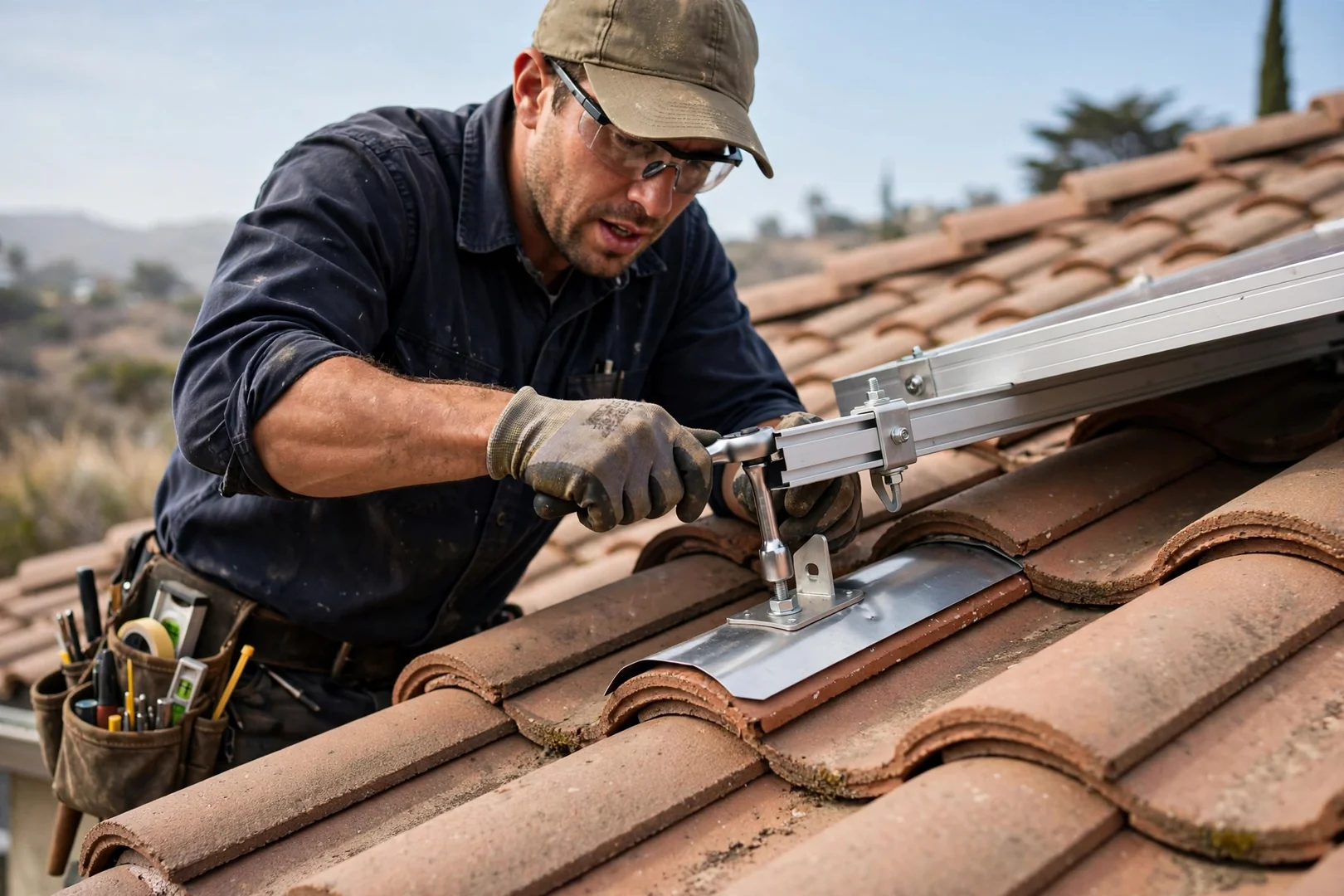
Close-up of tile roof hooks and flashing supporting solar rails
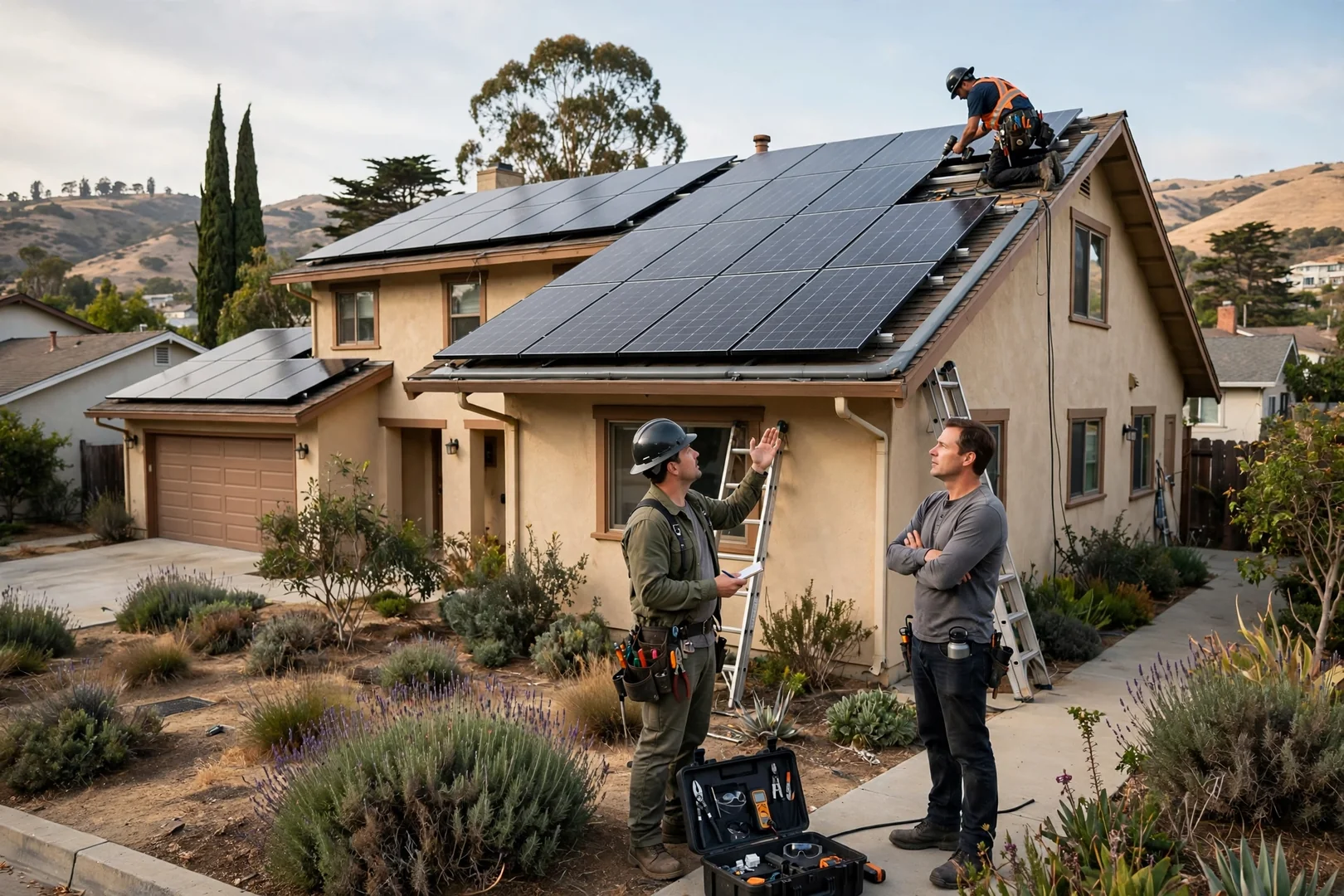
Wide view of two-story Salinas home with new rooftop solar modules
Solar modules split across two roof planes with microinverters attached
Upgraded main service panel with solar disconnect mounted beside it
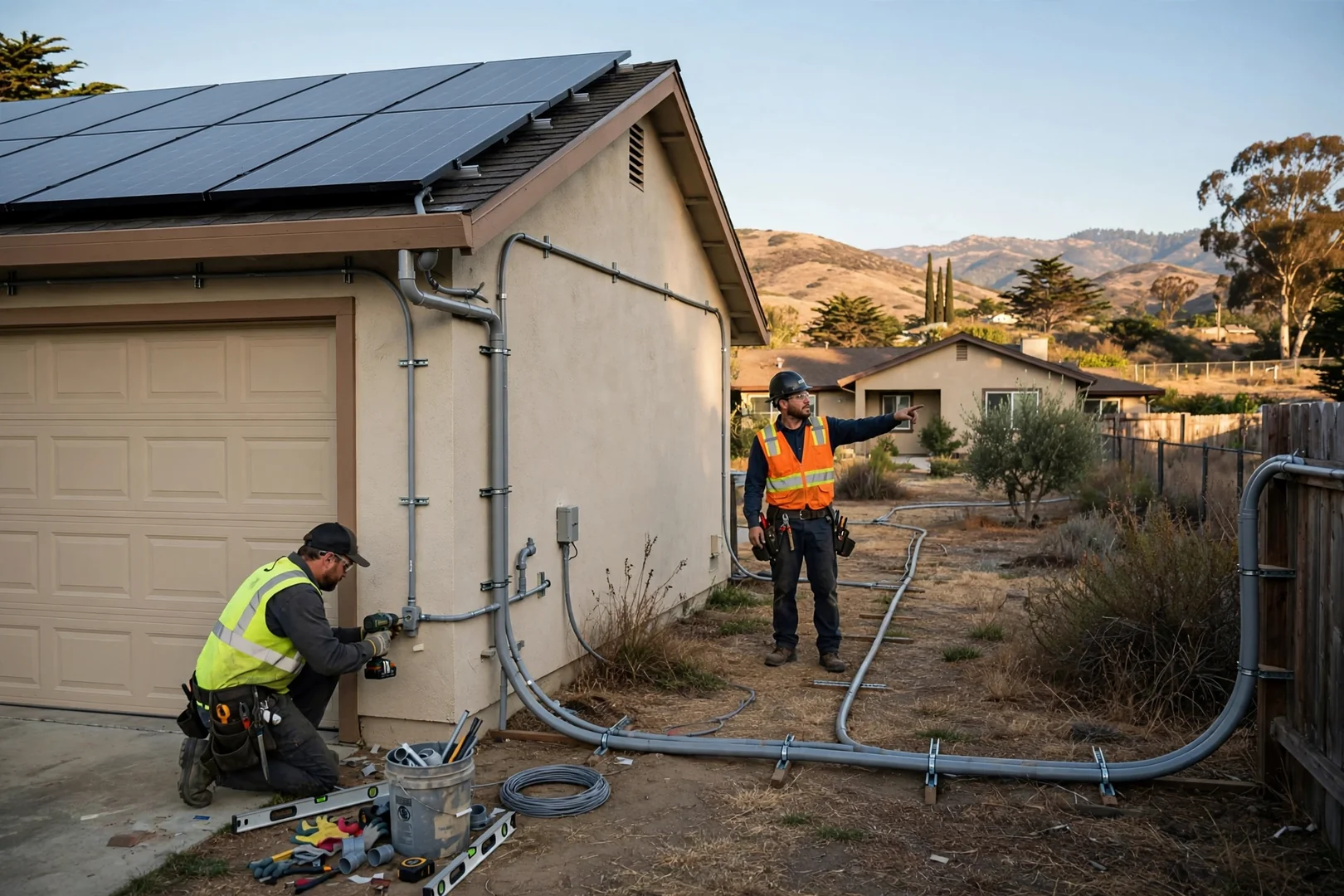
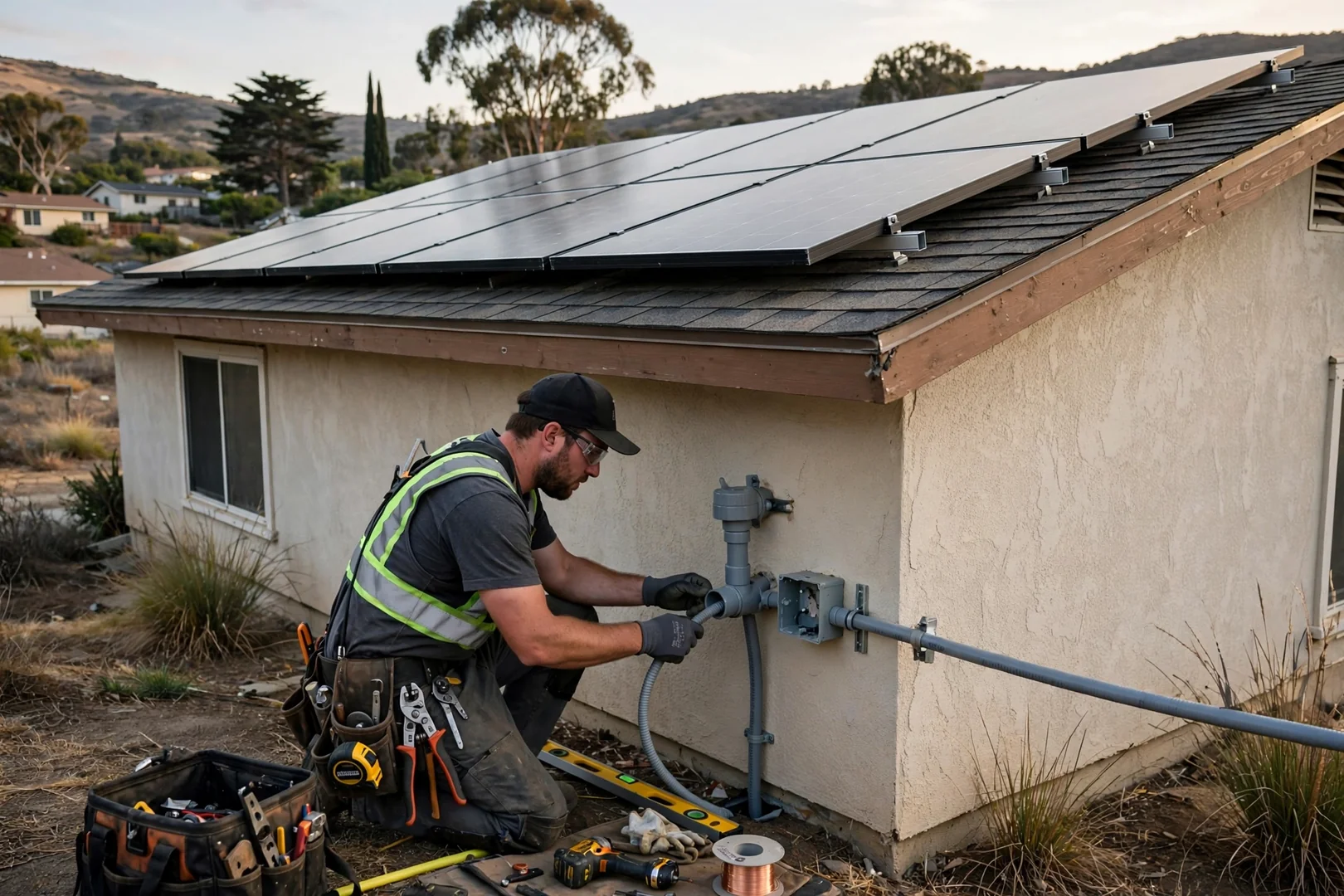
Detached garage solar array with conduit run toward the main house
Single-story ranch home solar array with battery ready conduit stub
Installer setting aluminum rails and standoffs on a residential roof deck

Trusted Residential Solar Installers

Why Do Salinas Homeowners Trust Us for Residential Solar Installation?

Salinas homeowners choose us for residential solar installation because every project follows the same documented sequence: a written estimate, a load and roof-structure assessment, permit submission, then installation and a post-job walkthrough. Before any rail or flashing goes up, we measure rafter spacing, check attachment points, and run shade modeling to size the array against actual household kilowatt-hour use. Crews arrive on the scheduled date. Racking layout, conduit routing, inverter placement, and torque checks are photographed and filed so future service calls start with real records instead of guesswork.

Coastal fog and marine air near Salinas affect production curves and hardware corrosion, so we specify flashed mounts and stainless fasteners suited to local roof types. String or module-level power electronics get selected based on shading, not sales preference. In 2026 we continue the same practice: clear explanation of the interconnection and inspection steps, a single point of contact through PG&E approval, and a scheduled follow-up after commissioning to confirm monitoring data matches the production estimate. No surprise change orders. Anything discovered mid-install is documented and reviewed with you before work continues.

Request a Written Estimate
Solar crew mounting roof racking on a Salinas home

Residential Solar Installation FAQs

Residential Solar Installation FAQs for Salinas Homeowners

Below are the questions Salinas homeowners ask most often before a rooftop or ground-mount system goes in during 2026. Answers cover scheduling, what the install includes, site preparation, cost factors, and local roof and utility conditions.

If your situation involves an older roof, a panel upgrade, or a battery added later, call 831-282-3539 or email help@salinassolarpanelinstallationpros.com. We will confirm details in writing before scheduling.

Ask Us About Your Roof

Rooftop installation work itself usually runs one to three days, but the full timeline depends on permitting and utility interconnection approval, which are handled by the city and PG&E rather than by us. We schedule the site assessment, racking and module mounting, inverter wiring, and inspection as separate confirmed appointments. You get the dates in writing and a notification before each crew visit.

A residential solar installation includes site and roof-structure assessment, system design and shade modeling, permit paperwork, flashed roof mounts and racking, module setup, inverter and conduit installation, main service panel connection, monitoring configuration, and coordination through final inspection. Removal of packaging and old mounting hardware is part of the job. We finish with a walkthrough of the monitoring app and a photo record of attachment points and wiring.

Clear access to the attic, the main electrical panel, and roof edges is all most Salinas homeowners need to arrange. Move vehicles from the driveway so equipment and ladders can stage safely, and keep pets indoors while crews work near conduit runs and disconnects. If your roof is near the end of its service life, tell us during the estimate so we can discuss replacement before racking is attached.

Cost is driven by system size in kilowatts, module and inverter selection, roof type and pitch, the number of penetrations and flashings needed, main panel capacity, and whether a service upgrade or battery is included. Ground-mounted arrays add trenching and footing work. We provide an itemized written estimate after the site assessment instead of quoting a per-watt figure sight unseen.

Morning marine layer reduces early production but Salinas still gets strong mid-day and afternoon irradiance, so systems are sized using local production modeling rather than statewide averages. We account for fog patterns, tree shading, and roof azimuth when choosing between string inverters and module-level power electronics. For 2026 designs we also confirm expected annual kilowatt-hours against your utility usage history so the array matches real demand.

Book Residential Solar Installation

Schedule Residential Solar Installation in Salinas

Ready for numbers you can review? Our team measures your roof planes, checks main panel capacity, and returns a free written estimate covering module count, inverter type, and expected production. There is no obligation to move forward. Salinas homeowners planning a 2026 install get placed on the schedule with a confirmed date and a clear scope before any work starts.

Call or email to set up a site assessment. We confirm appointments ahead of time, document panel layout and conduit routing, and walk you through the permitting and utility interconnection steps in plain terms. Ask questions during the visit. Reach out today and get your Salinas residential solar project moving.

Request a Free Estimate 831-282-3539

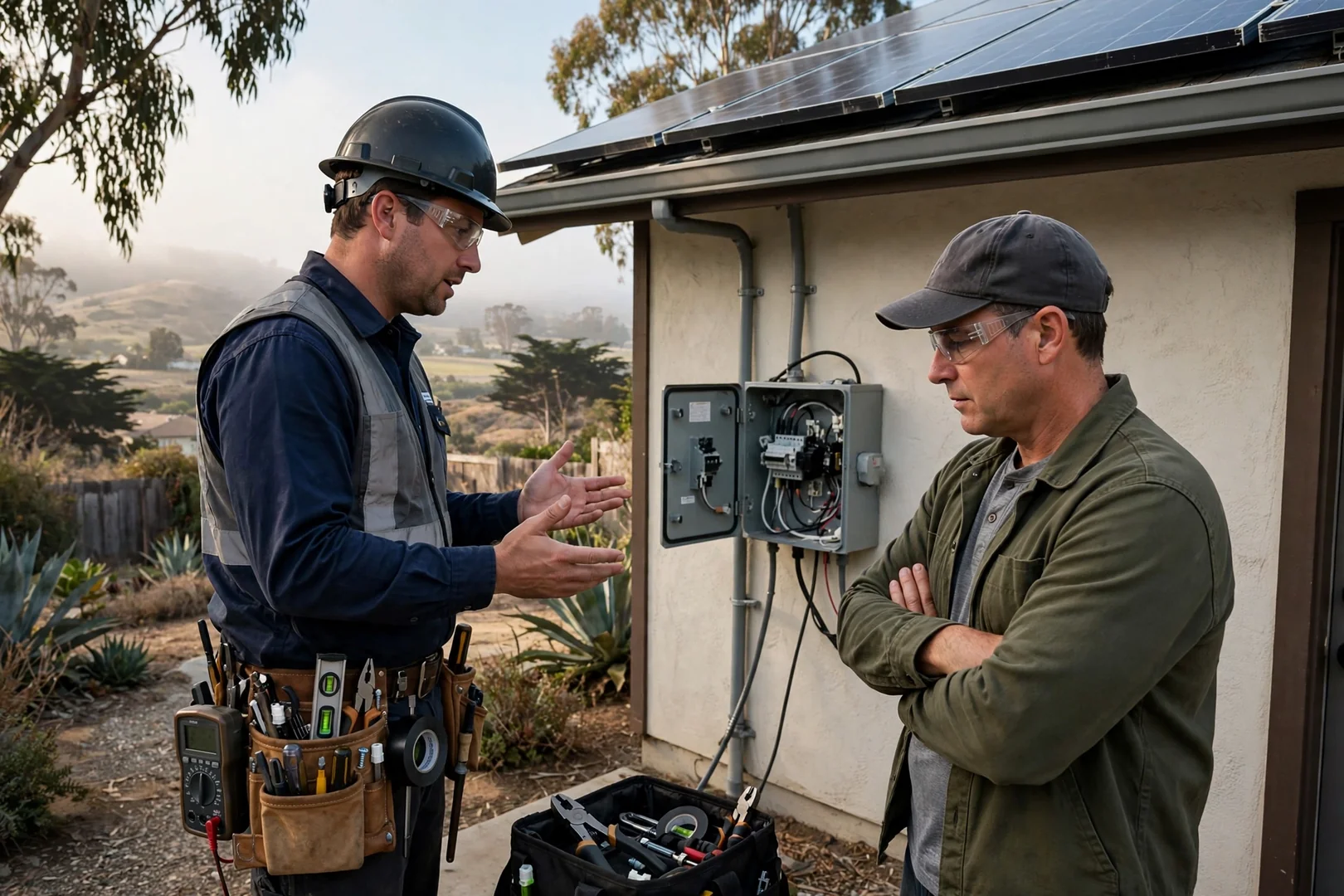
Technician reviewing rooftop solar layout plans with a Salinas homeowner