About Our Solar Team in Salinas
Solar work in Salinas comes down to correct sizing, clean wiring, and follow-through after the panels are set. Our crews handle residential and commercial PV arrays, inverter swaps, battery storage, and roof or ground-mounted racking, with written estimates and a post-job walkthrough on every project. Heading through 2026, scheduling stays organized, arrival windows are confirmed in advance, and each step of the install or repair is explained before tools come out. Read on for our background, our field experience, and how we keep service standards steady across different Salinas properties.
Talk to Our Team 831-282-3539Request a Solar Estimate
Send your property details and service needs. We reply with a written estimate and a confirmed appointment window.
Our Background
Background of Salinas Solar Panel Installation Pros
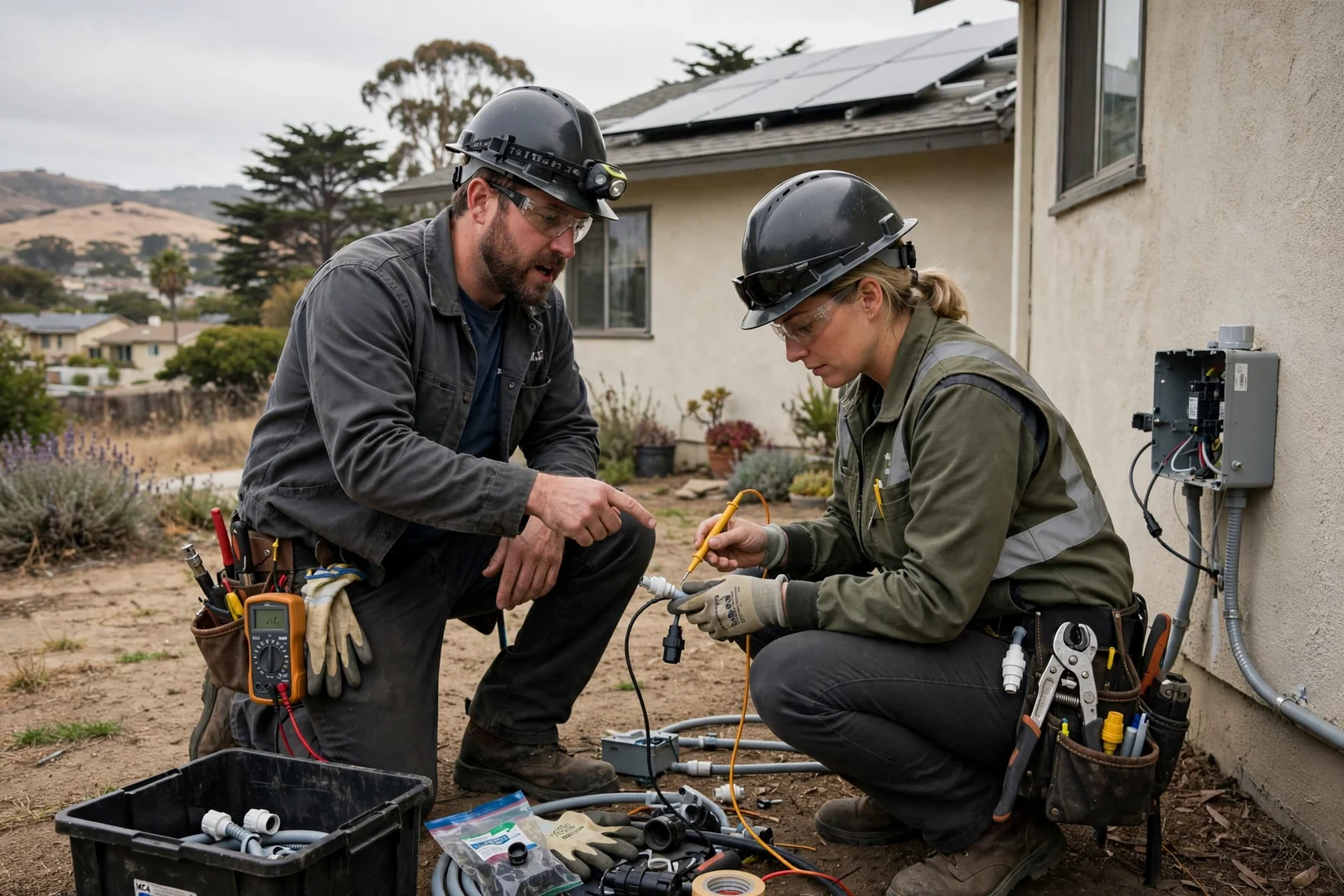
Built around field service rather than door-to-door sales, this company grew from steady installation and repair work across Salinas neighborhoods and farm-adjacent properties. Daily work includes PV module replacement, string and microinverter changeouts, battery storage tie-ins, and troubleshooting production drops caused by shading, coastal fog, or failed MPPT channels. Salinas roofs vary widely, from older comp shingle to standing seam metal and open ground space, so racking and flashing decisions get made on site instead of by template. Documentation matters here. Every job gets a written scope, labeled conductors, and photos of the completed array for the homeowner's records.
Consistency came from repetition, not from a slogan. Repeat calls from property managers and homeowners taught the crew that clear scheduling, accurate load calculations, and honest reporting on panel or inverter condition reduce callbacks. Through 2026, the same process applies to a single residential rooftop system and a multi-string commercial array: site assessment, permit paperwork, equipment verification, install, commissioning, then a walkthrough covering monitoring access and maintenance intervals. Clients across Salinas keep the same point of contact from estimate to final inspection.
Call Us On: 831-282-3539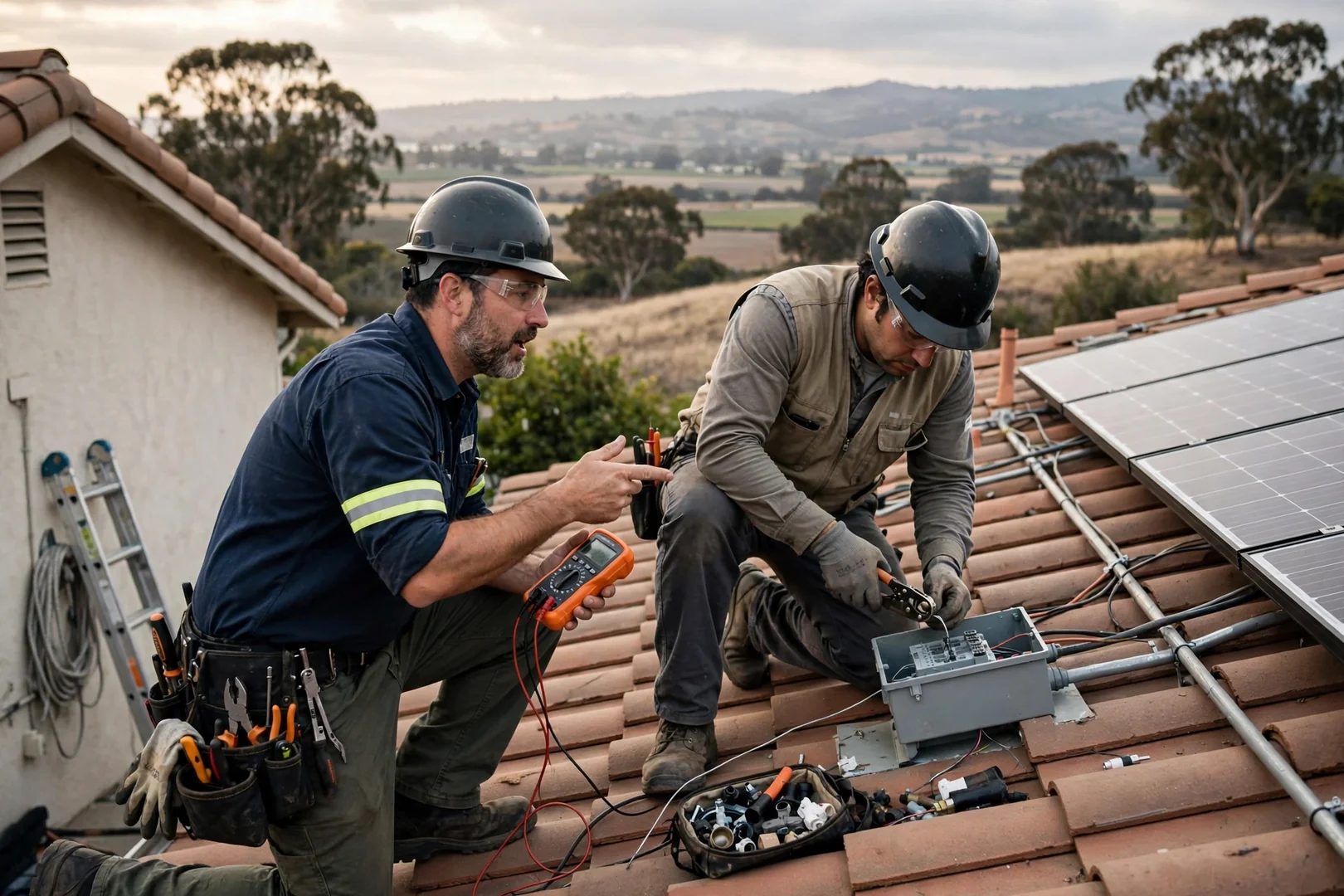
// Hands-On Solar Experience //
What Experience Do We Bring to Salinas Properties?
Professional Standards
What Standards Guide Our Solar Work?
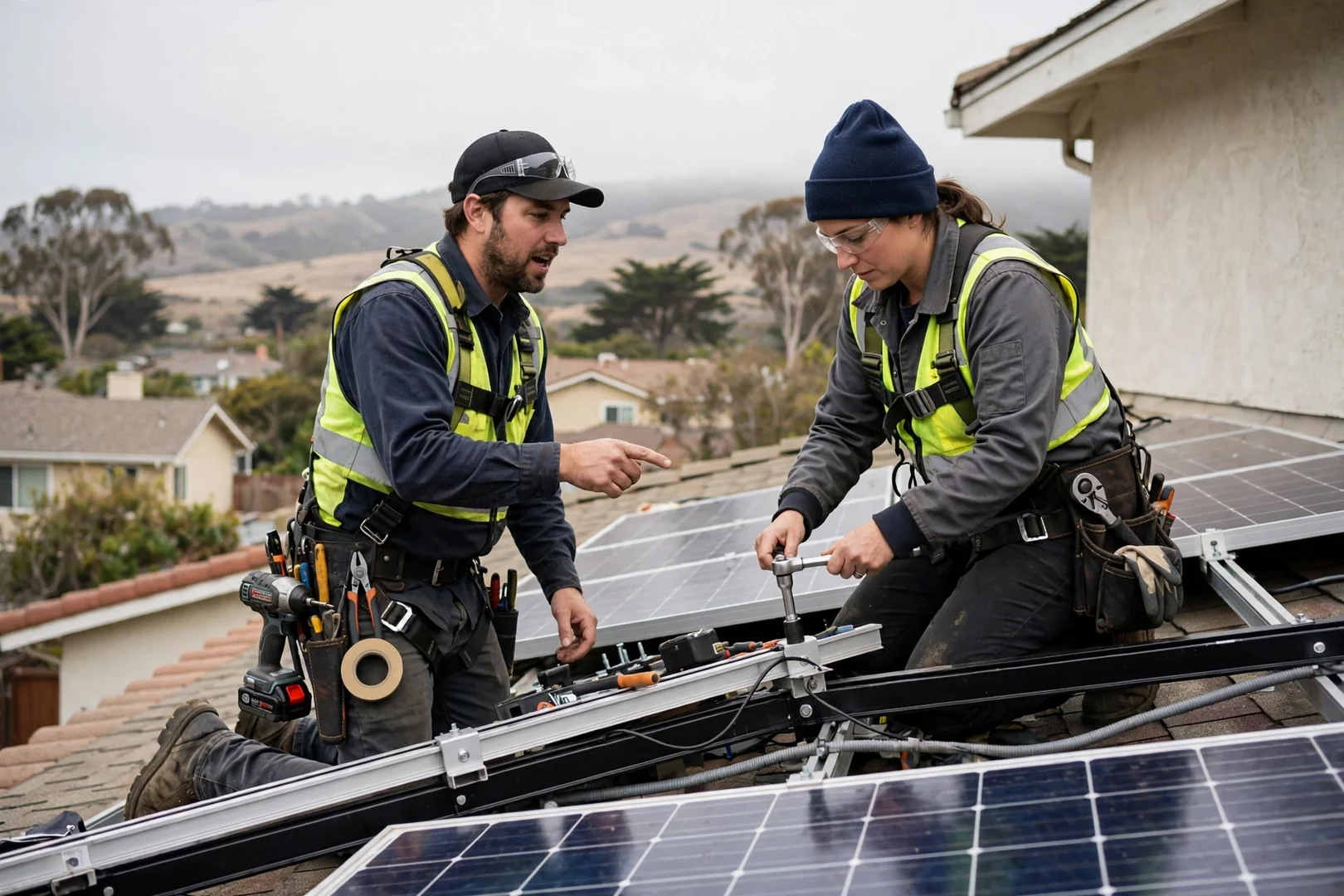
Every install starts with a documented site assessment: roof deck condition, rafter spacing, main panel capacity, and available conductor runs. Crews wear fall-protection harnesses on all pitched-roof work and use insulated tools when handling DC string wiring or combiner terminations. Torque values on flashing bolts and racking clamps are checked against manufacturer specifications, then logged. Short checklists keep it consistent. Array layouts and rapid-shutdown wiring are drawn to meet the electrical code cycle in force for 2026 permits in Salinas, and inverter commissioning readings are recorded before the crew leaves.
Tools get inspected before each job, not after a failure. Meters, clamp ammeters, and torque wrenches are function-checked, and damaged extension cords or worn harness webbing are pulled from service. Packaging, cut rail, and removed modules are separated for recycling or manufacturer return rather than left on site. Homeowners receive written estimates before work begins, a photo record of mounting points and conduit routing, and a post-job walkthrough covering monitoring access and shutdown procedures. Technicians train on the specific racking and inverter platforms they install, so the same procedure is followed on the second job as on the first.
Request a Written Estimate 831-282-3539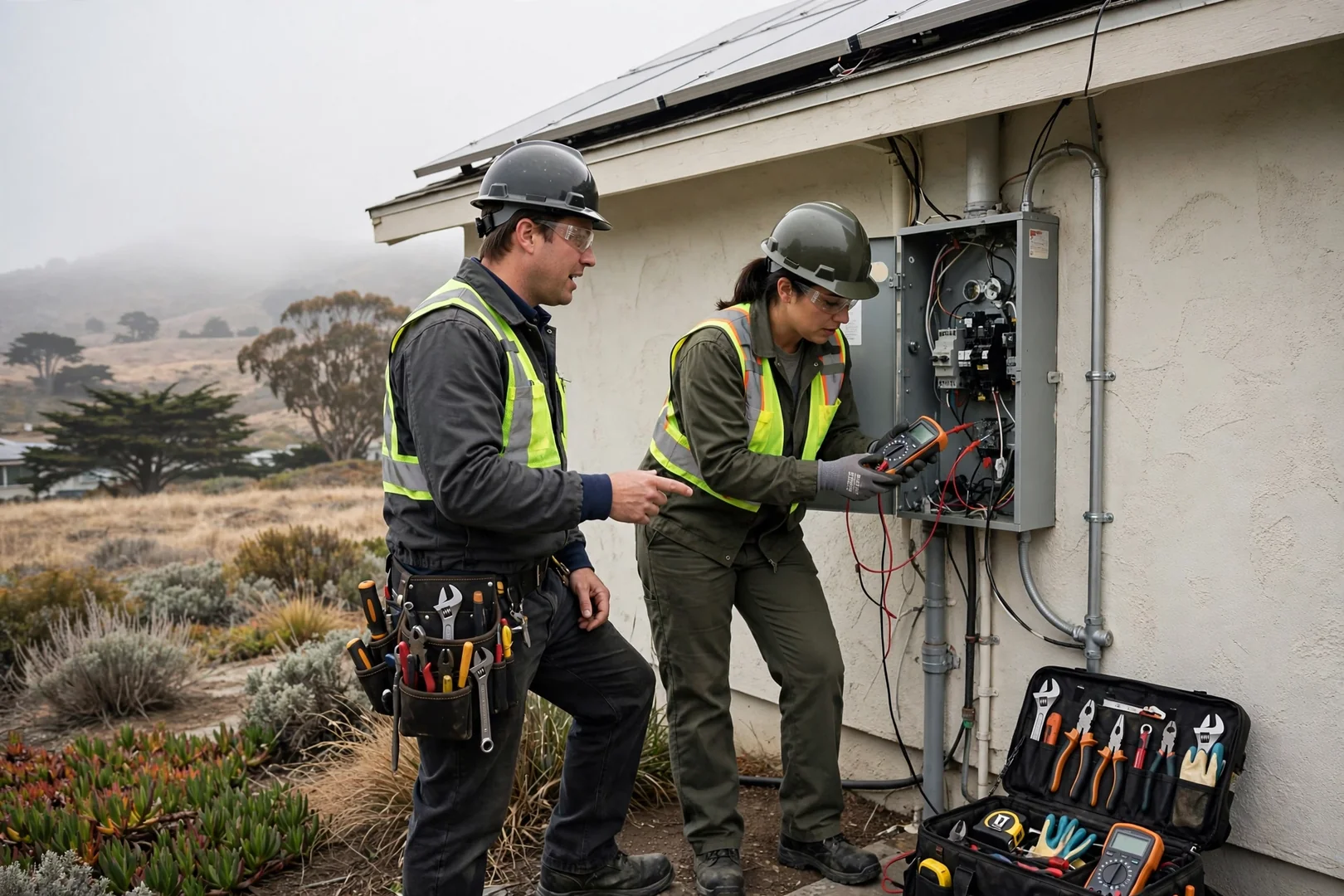
Prepared for Salinas Properties
How Are We Equipped for Salinas Properties?
Salinas housing runs from mid-century single-story homes with composition shingle to newer tile roofs and low-slope agricultural and warehouse structures on the outskirts. Morning marine fog off the valley delays production and hides moisture under flashing, so inspections include irradiance readings taken later in the day plus infrared scanning for hot cells and moisture paths. Summer afternoon winds moving through the valley affect ground-mount ballast and pier depth decisions, so soil probes and layout string lines come out before racking is set. Rural parcels often need off-grid or hybrid battery sizing, which means load logging equipment and clamp meters on service panels. In 2026 our crews continue weekly checks on harnesses, ladders, meters, and torque tools.
Rafter locating, deck moisture checks, and flashing inspection before any penetration is set on shingle, tile, or low-slope roofs. Insulation resistance testers, clamp ammeters, and IV curve or string voltage checks used to verify array output and locate faults. Production readings scheduled around valley marine layer, and ground-mount ballast and pier depths chosen for local wind exposure. Harnesses, anchors, ladders, torque wrenches, and meters function-checked on a set schedule, with damaged items removed from service. Familiarity with Salinas roof types, valley wind, and utility interconnection steps keeps site visits shorter and estimates closer to final cost. Ask what we would check on your property.
How We Work
How Do We Approach Every Solar Job?
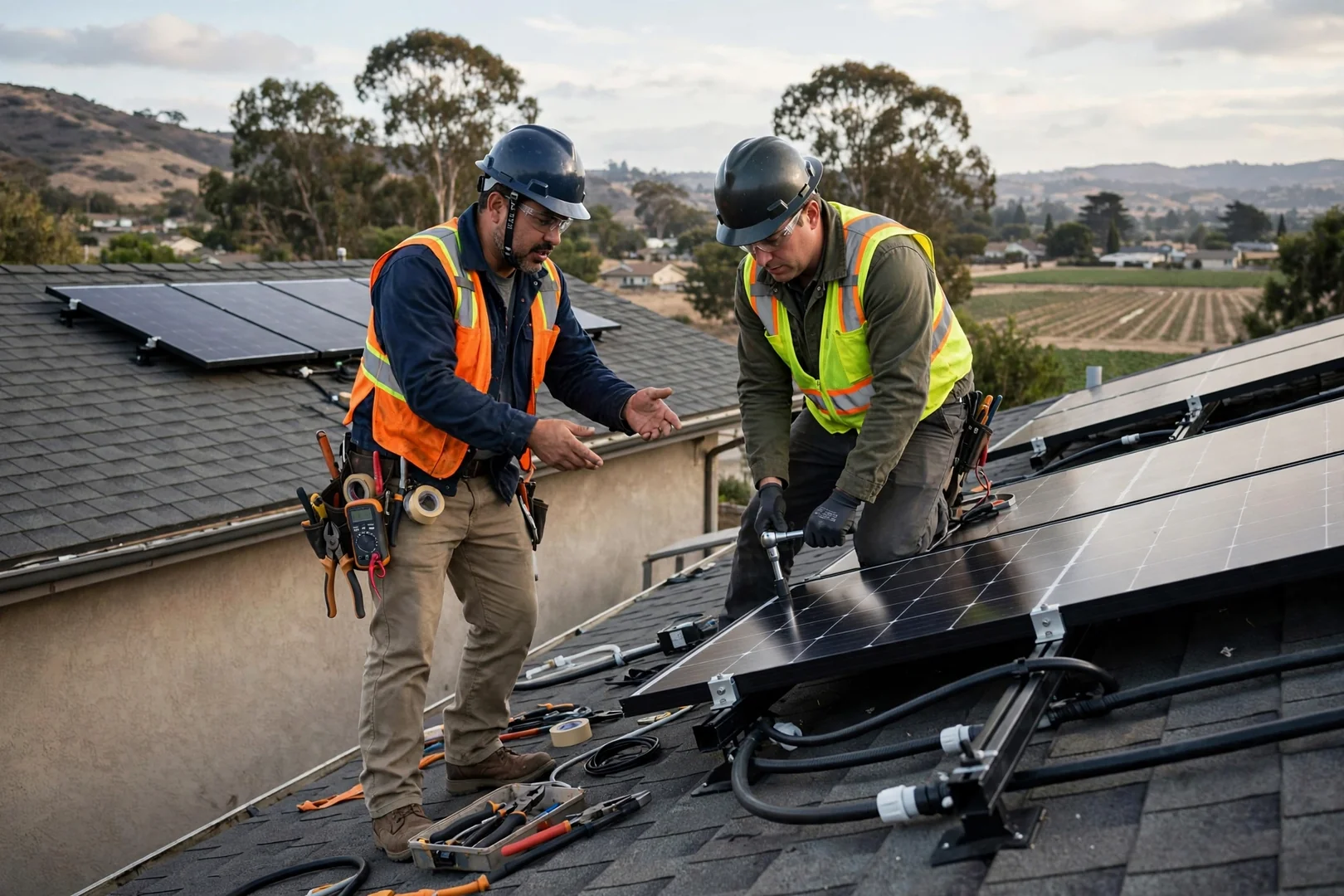
We follow the same sequence on every job: site assessment, written estimate, scheduled install date, commissioning, then a documented walkthrough. Scope decisions get explained before work starts, including whether a roof needs repair ahead of racking, whether the main service panel supports a battery backup circuit, and whether a microinverter or string inverter layout fits the shading pattern. Arrival windows are confirmed the day before, and if a permit or utility interconnection review shifts the schedule, we call rather than let the date pass quietly. Crews tarp work areas, sweep for screws and cut rail, and magnet-sweep driveways before leaving. Commissioning data, torque logs, and photos of mounting points and conduit runs go into your file, so a future repair or panel replacement starts with records instead of guesswork. Follow-up in 2026 includes a monitoring check after the first full production month and a straight answer on whether output matches the estimate. Salinas homeowners and property managers get the same process on a single-string repair as on a full commercial array.
Contact UsCustomer Commitment
What Can Salinas Customers Expect From Us?
Every project starts with a written estimate that lists panel counts, inverter models, mounting hardware, and labor separately, so pricing stays clear before anyone climbs a roof. Crews arrive during the scheduled window, and if a parts delay or utility interconnection review shifts the timeline, you hear it from us first. Work areas get covered, conduit runs are planned before drilling, and roof penetrations are flashed and sealed to the same standard on every job. We photograph attachment points, wire management, and rapid shutdown labeling, then include those images with your closeout documentation. Nothing is hidden.
Before we leave, we walk the site with you, power up the system, show the monitoring app, and explain what normal production looks like across Salinas seasons and coastal fog patterns. Through 2026 we are keeping the same repeatable process for service calls, panel replacements, and battery additions: confirm the appointment, diagnose the fault, explain the options, document the fix. Questions after the install get answered by the people who did the work. That consistency is how long-term confidence gets built, one property at a time.
Request a Written Estimate 831-282-3539